Community Health Workers (CHWs) are the cornerstone of an effective, equitable health system, yet their own mental wellbeing is often an overlooked priority. Groundbreaking research from LVCT Health and our partners reveals the critical stressors—from burnout and financial insecurity to stigma and harassment—that undermine their vital work. But there is a clear path forward. Our scoping review identifies the powerful protective factors and evidence-based solutions needed to build a resilient, supported CHW workforce. To explore the key findings and understand how we can collectively champion those who care for our communities,
Quality Improvement (QI) is a systematic approach aimed at measuring performance, identifying gaps, and implementing strategies to improve the quality of health services. It ensures consistent delivery of appropriate services to achieve desired health outcomes. A key component of this process is the establishment of Work Improvement Teams (WITs). Despite facility-based QI interventions being used over time, integrated community and facility QI approaches haven’t been used in Kenya. This gap has highlighted the need for practical, sustainable models to support QI efforts. The C-it-DU-it study addressed this gap by using the Kenya Quality Model for Community Health to implement QI processes, the model used integrated QI approach involving both the community and facility stakeholders. It is a model that inspires community led QI approach towards sustainable interventions that increases the quality of uptake of ANC service delivery to ensure all pregnant women are identifi ed early, referred and meet new required 8 ANC contacts.
Community Health Workers (CHWs) are vital in bridging informal and formal health systems, enhancing access to underserved populations. Despite their essential roles, they often contend with heavy workloads, limited structured support, and inconsistent compensation. While existing research has focused on their responsibilities, few studies have examined their lived experiences, particularly on their mental well-being (MWB). This multinational collaborative study seeks to explore CHWs’ personal and work experiences and how these infl uence their mental well-being in urban and rural settings. The fi ndings will support the co-design of context-specifi c interventions and inform policy recommendations.
Community Health Workers (CHWs) are globally acknowledged as a vital health workforce and a bridge between informal community health systems and formal healthcare systems. In resource-constrained settings, CHWs are often the only point of contact with formal health services for many among the urban and rural poor. CHWs have heavy workloads, are under-prioritized, have minimal supervisory support, and the majority are not fairly compensated. Evidence examining CHWs’ mental well-being and agency is scarce. Furthermore, other elements of a CHW experience are more widely documented, but few consider the CHW as an individual with needs related to their mental well-being. This study sought to understand the perceptions and experiences of policymakers regarding community health services and their interaction with Community Health Workers.
Community Health Workers (CHWs), locally known as Community Health Promoters (CHPs), are essential frontline providers of primary healthcare in underserved and low-resource settings. They are a vital link between the community and the community health system. Despite operating under high workloads and performing their tasks with minimal support as volunteers, their agency is seen in how they take ownership of their work and contribute to Community health. We employed the Photovoice approach to explore factors infl uencing CHPs’ mental well-being in Kenya.
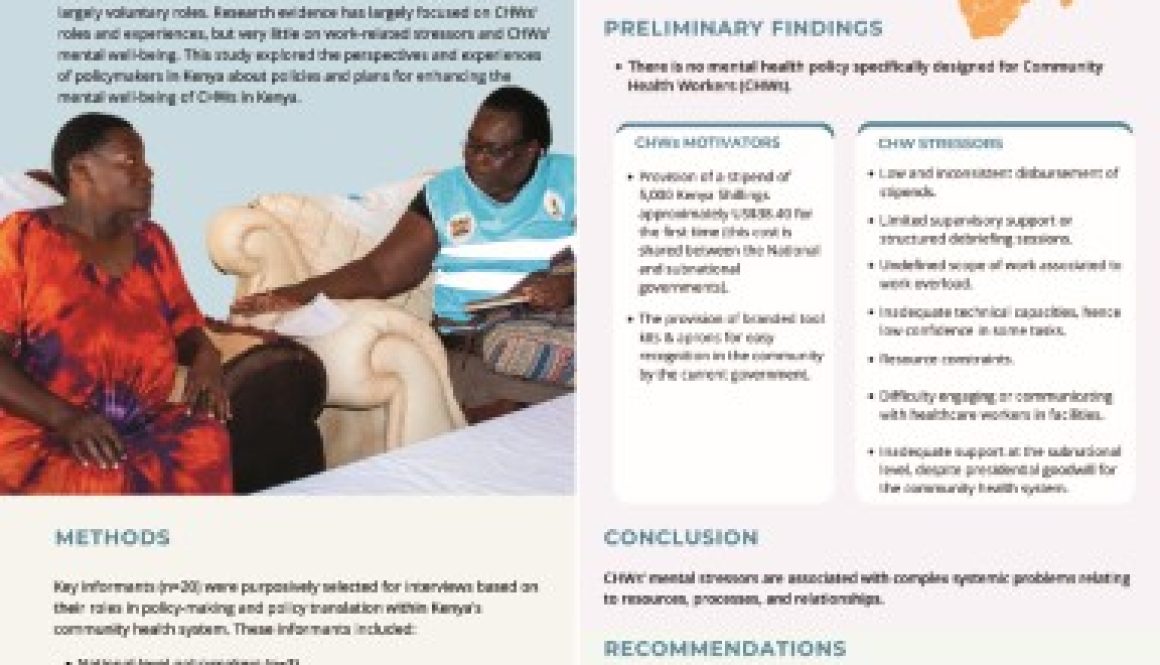
Community Health Workers (CHWs) are globally acknowledged as a vital health workforce and a bridge between informal community health systems, and formal healthcare facilities. In resource-constrained settings like Kenya, CHWs are often the only point of contact with formal health services for particularly poor people in urban and rural contexts. CHWs have heavy workloads, are under-prioritized, have minimal supervisory support, and the majority are not fairly compensated. Evidence on CHWs’ mental well-being and available support within the community health systems is scarce.
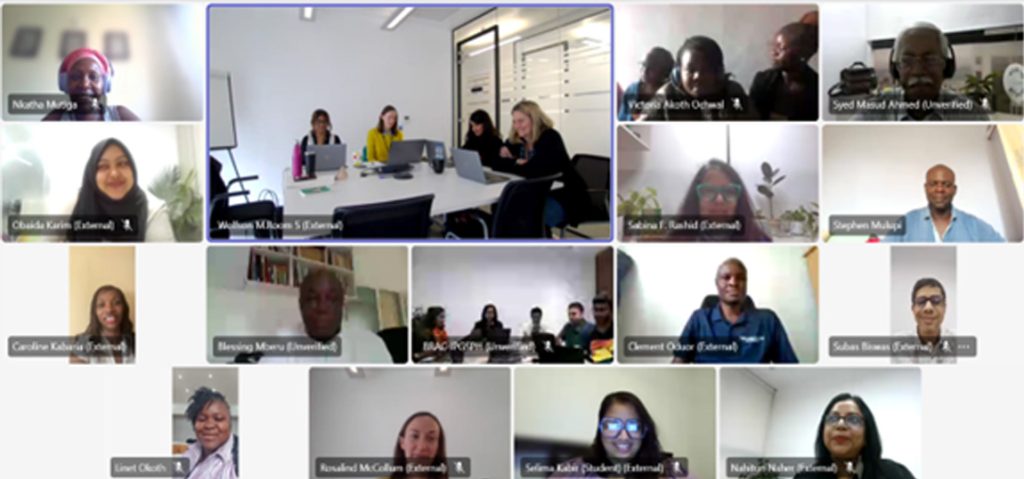
Some meetings feel like a formality. This wasn’t one of them. The SHINE Annual Partners Meeting 2025 turned a virtual setting into a space for real connection and clarity. I’ll admit, when I saw it stretched across two weeks, I braced myself for screen fatigue. But the format was surprisingly light: two to three hours a day, spaced out enough to stay engaged and still get other work done.
The project consortium consists of LVCT Health and APHRC (Kenya), JPG BRAC (Bangladesh), and LSTM (UK). At the meeting, we gathered our voices not just to exchange updates, but to realign, rethink, and reimagine how we support community health workers and their mental well-being. Community health workers play important frontline roles in linking communities to healthcare services. They, however, bear many burdens in discharging their roles. We must care for carers. The SHINE study strategically employs mixed methods- quantitative surveys and a range of community-based participatory methods, to explore motivations, stressors, coping mechanisms and policy environment for mental health and wellbeing for community health workers in Kenya and Bangladesh. This study is in its third year, and we were convening a virtual annual meeting to reflect on progress, celebrate collective achievement, and, in true collaborative spirit, map the way forward towards the next exciting stage- dissemination of study findings and co-designing appropriate interventions, based on data.
What set this meeting apart was its design. Beyond live sessions and presentations of various stages of the research and emerging findings, we worked through breakout rooms to dive deeper into thematic discussions. These smaller sessions allowed for more candid and collaborative thinking, whether we were shaping country-specific workplans or adapting evaluation frameworks to fit local realities. In those rooms, the tone shifted from presentation to co-creation, and the insights felt rooted, practical, and bold.
We also used discussion boards throughout the meeting to actively gather feedback, exchange ideas, and surface priorities. These boards became living threads of reflection, helping us clarify complex issues and collectively shape the way forward. Whether probing intervention strategies or revisiting partnership values, the responses guided key decisions and amplified voices that might otherwise get lost in the flow.
A recurring theme throughout was the importance of context. As we reviewed and refined the project work plan, it became clear that timelines and strategies couldn’t be one-size-fits-all. Teams surfaced the unique rhythms, opportunities, and constraints they face in their respective countries. This awareness of local realities led to more adaptable planning and reaffirmed our commitment to inclusive implementation.
We explored formative research, mental health literacy, capacity strengthening, and advocacy, all underpinned by a consortium-wide focus on equity, agency, and resilience. There were moments of challenge, plenty of insight, and a deepening sense of unity and duty. One of the most powerful moments for me was revisiting our core partnership values: a community health worker-centred, equitable, sustainable, and transformative approach. It was an opportunity to ask ourselves if we’ve stayed true to what we agreed on in 2024. That reflection urged us, urged me, to pause, take stock, and confront that question with sincerity. It was an opportunity to recalibrate or reemphasise.
As we step into final stretch of the project-2025/2026, I’m carrying with me not just action points, but a renewed appreciation for the brilliance that emerges when we design together, listen deeply, and stay rooted in real-world impact. The SHINE consortium is more than a partnership; it’s a collective driven by shared values and vision.
The SHINE Project aims to develop a comprehensive approach that promotes well-being and resilience among Community Health Workers (CHWs) while incorporating training, community cohesion, and support within the health systems of Kenya and Bangladesh.