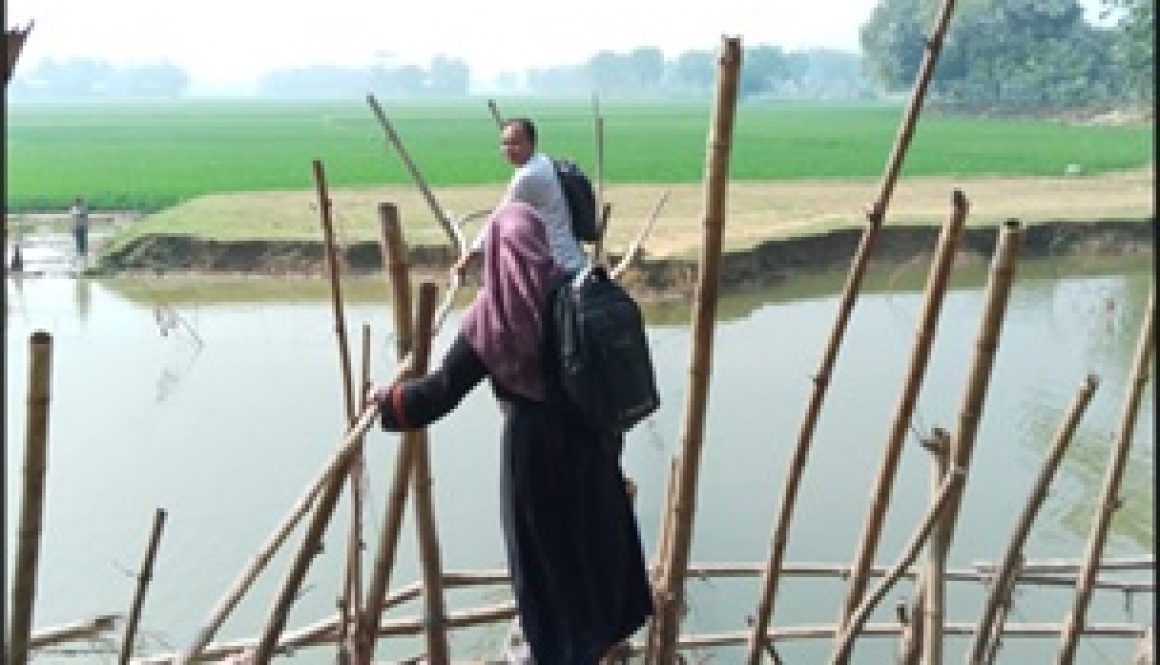
In Bangladesh, community health workers (CHWs) play an indispensable role in delivering health services to every corner of the country, often under extremely challenging conditions. Their commitment is unwavering, but the path they walk is quite literally filled with obstacles.
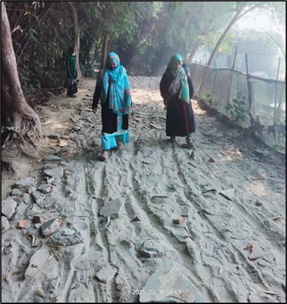
The most common mode of travel for CHWs is by foot. While they also rely on local transports like rickshaws, vans, boats, motorbikes, and auto-rickshaws, using these vehicles often costs them valuable time and money or resources they can scarcely afford. Many of the roads they must navigate are poorly maintained, becoming muddy and nearly impassable during the rainy season. In some areas, rivers that serve as main transport routes dry out during the dry season, forcing CHWs to switch between multiple modes of transportation just to reach a single destination.
Beyond these physical and logistical barriers lies a deeper, gendered challenge. In districts where fishing is a major livelihood, a local superstition claims that carrying women on boats will reduce the day’s fish catch. Consequently, boatmen often refuse to transport female CHWs. Even when women are allowed aboard, they frequently face harassment: unfairly inflated fares, verbal intimidation, and, at times, even threats of harm.
For many CHWs, walking long distances remains the only viable option. In numerous upazilas, local transportation is either scarce or nonexistent. Carrying heavy equipment across rough terrains under the scorching sun or pouring rain is part of their daily reality. And as the day stretches on, many CHWs find themselves still providing services as night falls. Getting back home becomes a risky business, with dark, poorly maintained roads posing serious safety threats, especially for female workers traveling alone.
To cope with these persistent challenges, CHWs often take precautionary measures. They avoid certain routes known to be unsafe, even if it means walking longer distances. Sometimes, they wait for long hours just to find a safer or more convenient mode of transport. Many also request their husbands or other family members to accompany them during field visits to ensure their safety. However, all these coping mechanisms come at a personal cost: CHWs frequently have to pay for their commute out of their own pockets, adding financial strain to their already heavy burdens.
Despite these exhausting and often dangerous journeys, transportation allowances, if provided at all are minimal, leaving CHWs to shoulder the physical, emotional, and financial burdens alone.
The struggles of Bangladesh’s CHWs to reach their communities highlight the urgent need for better support systems, fair compensation, and safer transportation options. Their tireless dedication deserves not just recognition, but concrete action to ease their burden and honor their service.
Written by:
Semonty Jahan, Senior Research Associate,
BRAC James P Grant School of Public Health, BRAC University
We often walked for hours through fields, woods, and along riverbanks just to find one household. And sometimes, by the time we arrived, the man we were supposed to interview had already left the house for work.
Between February and March 2025, the SHINE Bangladesh team travelled to Mymensingh and Barishal to conduct a baseline survey for the SHINE project. Our plan was to cover five subdistricts each in the Barishal and Mymensingh districts. The subdistricts in Barishal are mostly river-oriented and remote, where commuting often requires crossing waterways. In contrast, the subdistricts in Mymensingh are largely industrial and host internally migrated communities. There are areas located near the international border where movement by outsiders is often restricted due to political tensions and limited transportation options. It was fulfilling work but also full of twists, turns, and lessons we didn’t expect.
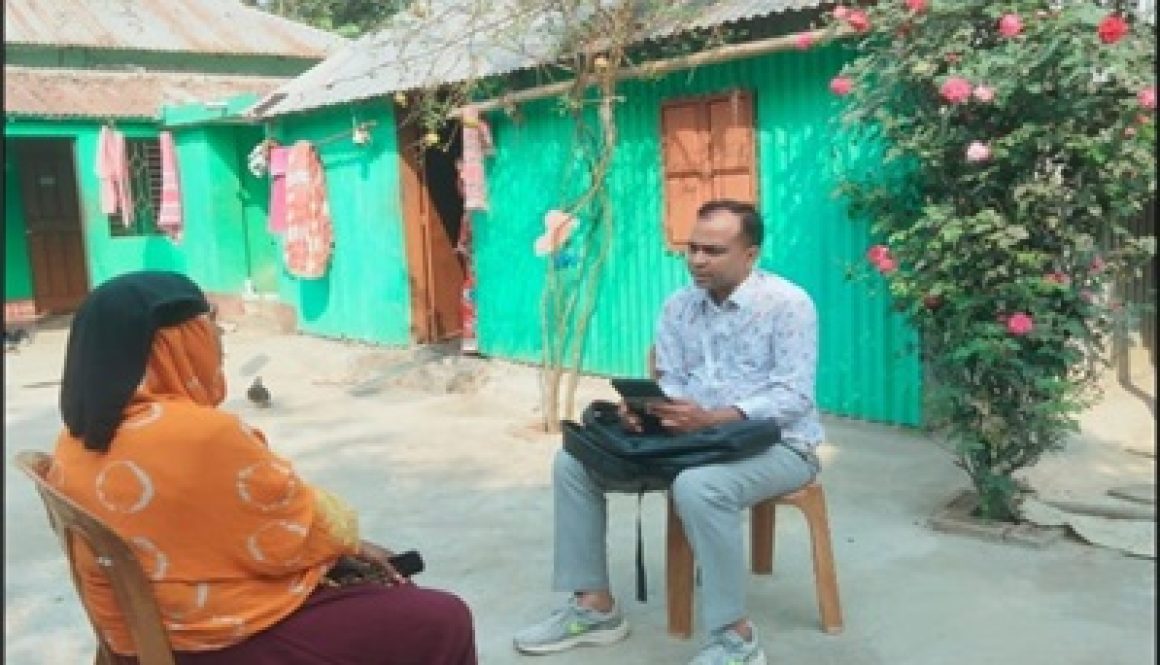
According to the sampling design, we had to move every 10 households to collect data. The distance between two homes wasn’t just a number. The maps don’t tell you how rough the roads are—or how much your legs will feel it later. Especially in Barishal’s char areas (river islands), reaching homes was a journey in itself. We walked through muddy paths and broken roads and even crossed small rivers. Sometimes, a boat was the only way forward, and we had to wait for hours to get a boat to cross the river. Other times, it was a hired motorbike ride followed by a 30- to 40-minute walk on the edge of a paddy field. Some clusters were so scattered that reaching the next household felt like trekking to a new village altogether.
Even after walking for miles to reach the households with the formed clusters at villages, one thing quickly became clear that in both districts, catching the male household head at home was not an easy task. In most cases, they would be out of their houses for work; some were nearby, others far away. It got even tougher during the harvesting season. We found ourselves going back to those homes more than once, adjusting our timing or rescheduling the interview.
Almost half of the data collection happened during the holy month of Ramadan, and that changed a lot of our daily work patterns. Many women were busy with prayers, preparing iftar, or simply didn’t feel up to talking during the day while fasting. On the other hand, in more conservative char regions, sometimes religious norms made it difficult for male data collectors to speak directly to women, which meant in those cases we had to rely more on female team members or reschedule visits, or sometimes both.
The sampling plan looks good in the office, but in real life, villages don’t always follow our spreadsheets. In some places, there just weren’t enough eligible households, so we had to move beyond the original boundary. That meant more walking, more coordination, and fewer interviews per day. And the “every 10th household” rule? In areas where homes are far apart or irregularly spaced, sticking to that “every 10th household” rule became a logistical puzzle. We had to have an instant short team meeting at field sites with the team lead and field team to make adjustments while keeping the integrity of our data quality.
In the Dhobaura subdistrict, Mymensingh, we hit a difficult situation. A recent incident of sexual violence had shaken the community where we were supposed to collect data, and the atmosphere was tense. Police patrols and local gatherings made it nearly impossible to continue fieldwork for a while. We had to be very strategic and careful during that tense time. And in border-side unions like Dokkhin Maijpara, in Dhobaura subdistrict, where cross-border unrest is common, outsiders (like us) weren’t always welcomed with open arms. Some community members were wary or suspicious, and earning trust became part of the job. Inspection by border guards was common while commuting to the targeted households.
If this fieldwork taught us anything, it is that maintaining methodological rigor while remaining flexible, both in scheduling and in mindset, is essential. In future field plans, we need to consider wider data collection windows, aligned with local routines (i.e., harvesting time, Ramadan, etc.). We should consider gender-matched field teams, especially in culturally sensitive areas like ours. Field plans should have time for community outreach ahead of data collection, to ease suspicion and build rapport, and account for terrain and travel time, not just sample size.
SHINE isn’t just about surveys. It’s about connecting with communities, listening closely, and making sure those often left out are finally counted—and heard.
Written by: . Ranjan Koiri (Senior Research Associate, BRAC JPGSPH, BRAC University),
Sukamal Chakma (Sr. Officer, Data Management, BRAC JPGSPH, BRAC University),
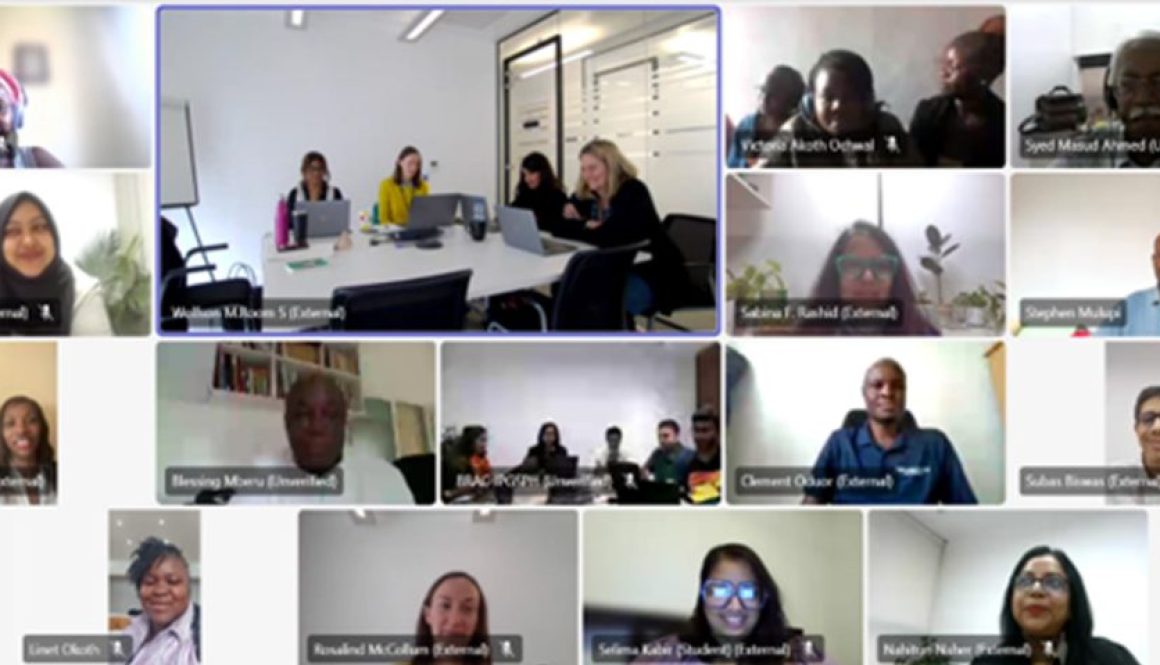
Some meetings feel like a formality. This wasn’t one of them. The SHINE Annual Partners Meeting 2025 turned a virtual setting into a space for real connection and clarity. I’ll admit, when I saw it stretched across two weeks, I braced myself for screen fatigue. But the format was surprisingly light: two to three hours a day, spaced out enough to stay engaged and still get other work done.
The project consortium consists of LVCT Health and APHRC (Kenya), JPG BRAC (Bangladesh), and LSTM (UK). At the meeting, we gathered our voices not just to exchange updates, but to realign, rethink, and reimagine how we support community health workers and their mental well-being. Community health workers play important frontline roles in linking communities to healthcare services. They, however, bear many burdens in discharging their roles. We must care for carers. The SHINE study strategically employs mixed methods- quantitative surveys and a range of community-based participatory methods, to explore motivations, stressors, coping mechanisms and policy environment for mental health and wellbeing for community health workers in Kenya and Bangladesh. This study is in its third year, and we were convening a virtual annual meeting to reflect on progress, celebrate collective achievement, and, in true collaborative spirit, map the way forward towards the next exciting stage- dissemination of study findings and co-designing appropriate interventions, based on data.
What set this meeting apart was its design. Beyond live sessions and presentations of various stages of the research and emerging findings, we worked through breakout rooms to dive deeper into thematic discussions. These smaller sessions allowed for more candid and collaborative thinking, whether we were shaping country-specific workplans or adapting evaluation frameworks to fit local realities. In those rooms, the tone shifted from presentation to co-creation, and the insights felt rooted, practical, and bold.
We also used discussion boards throughout the meeting to actively gather feedback, exchange ideas, and surface priorities. These boards became living threads of reflection, helping us clarify complex issues and collectively shape the way forward. Whether probing intervention strategies or revisiting partnership values, the responses guided key decisions and amplified voices that might otherwise get lost in the flow.
A recurring theme throughout was the importance of context. As we reviewed and refined the project work plan, it became clear that timelines and strategies couldn’t be one-size-fits-all. Teams surfaced the unique rhythms, opportunities, and constraints they face in their respective countries. This awareness of local realities led to more adaptable planning and reaffirmed our commitment to inclusive implementation.
We explored formative research, mental health literacy, capacity strengthening, and advocacy, all underpinned by a consortium-wide focus on equity, agency, and resilience. There were moments of challenge, plenty of insight, and a deepening sense of unity and duty. One of the most powerful moments for me was revisiting our core partnership values: a community health worker-centred, equitable, sustainable, and transformative approach. It was an opportunity to ask ourselves if we’ve stayed true to what we agreed on in 2024. That reflection urged us, urged me, to pause, take stock, and confront that question with sincerity. It was an opportunity to recalibrate or reemphasise.
As we step into final stretch of the project-2025/2026, I’m carrying with me not just action points, but a renewed appreciation for the brilliance that emerges when we design together, listen deeply, and stay rooted in real-world impact. The SHINE consortium is more than a partnership; it’s a collective driven by shared values and vision.
The SHINE Project aims to develop a comprehensive approach that promotes well-being and resilience among Community Health Workers (CHWs) while incorporating training, community cohesion, and support within the health systems of Kenya and Bangladesh.
Working in community health is not for the faint-hearted. As one community health worker put it, “You need a heart to continue.” This simple but powerful sentiment speaks volumes about the challenges faced by community health promoters – especially when it comes to their mental well-being. Through the SHINE study, taking place in Nairobi County’s Korogocho area and Kiambu County’s Limuru, a comprehensive approach is being developed to foster resilience, well-being, and support for these crucial frontline workers.
Prioritising people over pay
For community health promoters, the mission is about transformation, not targets. Their purpose is driven by the impact they see in the communities they serve. Often, they are called to action at all hours, ready to help someone get to a hospital, even if that means dipping into their own resources or taking on debt. This dedication is a powerful example of how a people-first approach lies at the heart of their work.
Yet this relentless dedication, while admirable, can be mentally taxing. The emotional weight of being continually on call, coupled with the financial strain, can be a serious drain on mental health.
The role of people skills and negotiation
Mental well-being: The need for regular debrief sessions
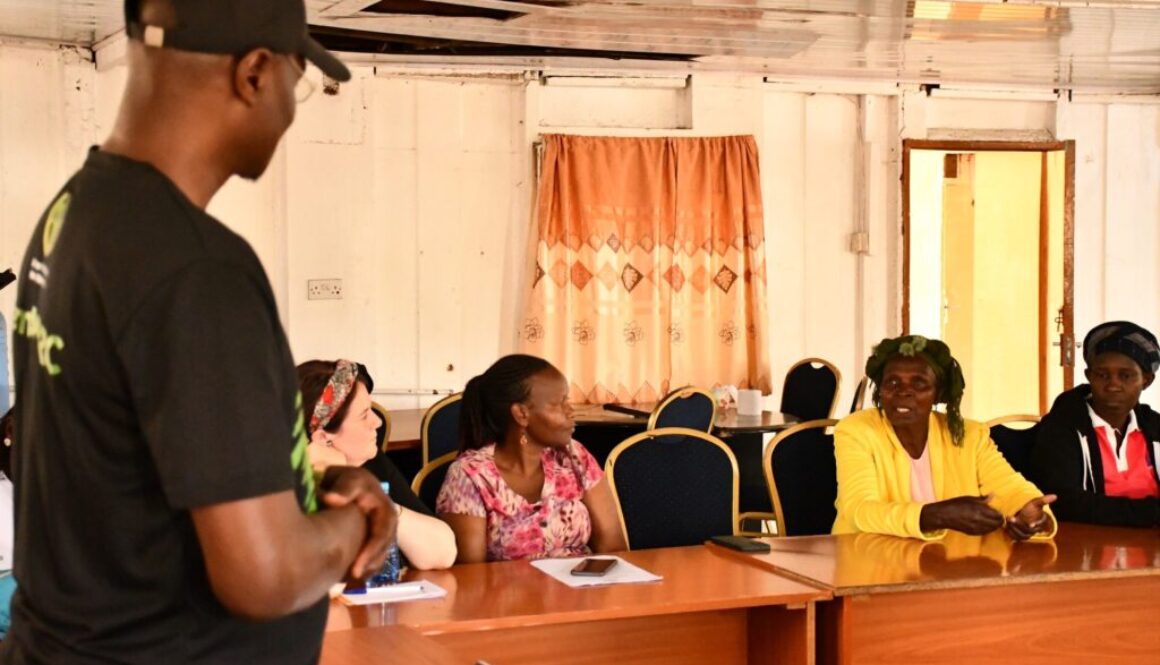
The SHINE study recognises the mental toll of this work and has created debrief sessions to support community health promoters. Here, they can share experiences, discuss challenges, and rejuvenate their spirits for the week ahead. These sessions are essential for emotional resilience, allowing them to process the week’s hardships and renew their focus. However, these sessions need to happen more regularly to be fully effective, as the demands on their time and energy continue to rise.
Why mental health matters for community health promoters
A healthy mind produces healthy results. For community health promoters to thrive and continue their impactful work, their mental well-being must be a priority. Unfortunately, community members don’t always understand the weight or complexity of their workload, which can lead to a lack of appreciation and support. The SHINE study’s focus on mental well-being is a critical step forward, but it’s also vital that we continue raising awareness around the needs of these health promoters. Continuous counselling, regular debrief sessions, and community sensitisation are essential in ensuring their mental resilience.
Investing in the mental health of community health promoters isn’t just a matter of supporting individuals—it’s about ensuring the well-being and longevity of the communities they serve. When we take care of those who care for us, everyone benefits.
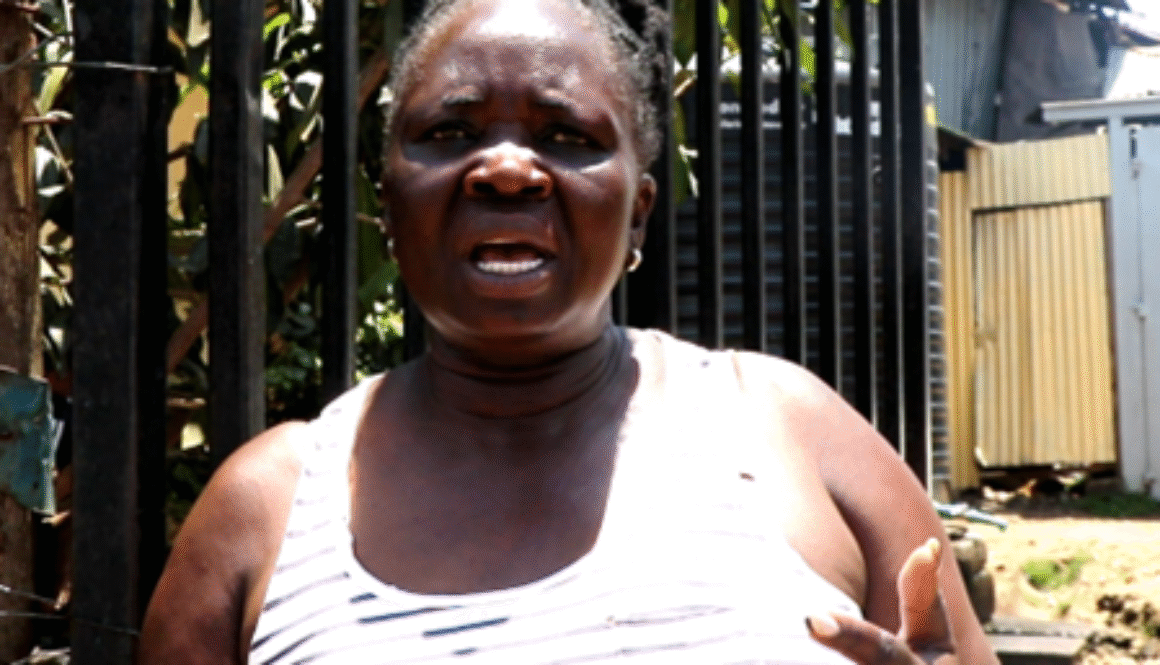
In the densely populated urban slums of Korogocho, Nairobi, Community Health Promoters (CHPs) play a pivotal role in bridging the gap between healthcare systems and the local communities. One such remarkable individual is Wasiaya (aka Wasee), a CHP whose life story illustrates not only personal transformation but also the critical importance of mental health support, self-care, and ongoing training for CHPs.
A Role Model Born from Chaos
Wasiaya’s journey into community health work was anything but straightforward. Before stepping into the role of a CHP, Wasee’s life was marked by turmoil and emotional distress. Growing up in Korogocho, she experienced the harsh realities of urban slum life – domestic violence, substance abuse in her community, and the constant threat of gender-based violence (GBV). The lack of support systems and mental health resources left her feeling isolated and unable to cope with the trauma she carried.
Her chaotic past manifested in anger and emotional instability, making it difficult to navigate personal relationships and community interactions. Yet, these challenges shaped her and motivated her to change. “I was chaotic,” Wasee recalls. “I didn’t know how to deal with my emotions, and I felt trapped in a cycle of pain…”
Wasee’s transformation began when she was introduced to a training program by Amnesty International, focusing on GBV and Violence Against Children (VAC) prevention. The training not only equipped her with knowledge and skills to support victims of violence but also provided her with coping mechanisms to address her own trauma.
Working in Kisumu Ndogo, an area within Korogocho notorious for high cases of GBV and VAC, Wasee began to connect with survivors and support them in accessing health services and legal aid. Through this work, she found a sense of purpose and healing. “Helping others allowed me to heal parts of myself,” she reflects.
Mental Health Gaps: A Hidden Burden
As a CHP, Wasee quickly realised that mental health was an often-overlooked aspect of community well-being. Many community members, burdened by poverty and violence, struggle with anxiety, depression, and trauma. However, stigma and lack of access to mental health services prevent them from seeking help.
“There’s some stress that can’t be hidden,” Wasee says. “But people here fear judgment, so they suffer in silence.” During a mental health session in Mathare, another informal settlement in Nairobi, she witnessed how stigma silenced those in need of support.
For CHPs like Wasee, the mental health burden is twofold—they not only support their community but also carry the emotional weight of the stories they hear. “We carry the community’s struggles on our shoulders, but who carries us?” she asks.
In her experience, women are more open to sharing their struggles, while men often suppress their emotions due to cultural expectations. This gender disparity further complicates mental health interventions in Korogocho. “The ladies are able to share,” Wasee notes, “but men feel that admitting to mental health challenges makes them weak.”
One of the most significant barriers Wasee faces in her work is the broken referral system. While CHPs are trained to identify mental health issues and refer severe cases to healthcare facilities, the limited availability of mental health professionals and long waiting times often leave patients without support. “It’s hard to refer someone when you know they might not get help soon enough,” she says.
While CHPs are vital in linking communities to healthcare services, being a CHP means carrying the weight of the community’s health, encountering difficult conditions and significant struggles, including:
Heavy Emotional Burden: CHPs often bear the emotional weight of community members’ struggles, leading to stress and burnout.
Limited Mental Health Support: There is minimal access to mental health support for CHPs themselves, despite their exposure to trauma.
Stigma and Discrimination: Mental health stigma in communities makes it difficult for CHPs to address these issues openly.
Inadequate Training: Short, one-off training sessions are insufficient. Continuous and inclusive training is necessary for CHPs to stay effective.
Referral Challenges: Limited healthcare infrastructure and long waiting times hinder effective referrals for mental health cases.
Gender Disparities: Women are more likely to share their struggles, while men often suppress their emotions due to cultural expectations.
Lack of Recognition and Support: CHPs are often undervalued and lack financial support and resources to perform their roles effectively.
Wasee believes that for CHPs to be effective, continuous training is essential. “One or two days of training is not enough,” she emphasises. “We need ongoing learning opportunities that are inclusive of all CHPs, especially in mental health support.”
Today, she is recognised as a role model in her community. Her journey from chaos to advocacy inspires other young women and men to join the fight against GBV and support mental health initiatives. Through her work, she is not only helping to heal her community but also breaking the stigma surrounding mental health.
“I found my healing in helping others,” Wasee says with pride. “But I also know that as CHPs, we need support too. When we are mentally well, we can serve our communities better.”
Wasee’s story is a powerful reminder that CHPs are not just service providers; they are individuals with their own struggles and triumphs. Investing in their mental well-being, providing continuous training, and creating supportive networks are essential to building resilient health systems in communities like Korogocho.
As the SHINE project continues to advocate for the mental well-being and agency of CHPs, stories like Wasee’s serve as a beacon of hope and a call to action for policymakers, healthcare providers, and community members to prioritise mental health at all levels.
Written by Freshiah Njoroge, a communication expert supporting the SHINE project, at LVCT Health
Imagine giving someone a camera and asking them to tell their story through images. The narrative shifts from words alone to something more powerful—visual, tangible, and deeply personal. This is the essence of Photovoice, a participatory research method that merges photography with storytelling, empowering individuals to share their lived experiences. Developed by Wang and Burris in the 1990s, Photovoice serves as a tool for community engagement, fostering dialogue, bridging gaps in understanding, and inspiring action. By enabling individuals to document their realities, it elevates marginalised voices and presents compelling visual narratives that demand attention and change (Hanna & Hanna, 2023).
In mental health research, Photovoice has gained prominence as an approach that uncovers deep insights into lived experiences. One study highlighted how participant-produced photographs captured the stigma, struggles, and recovery journeys of individuals with mental illness (Han & Oliffe, 2016). This demonstrates the transformative potential of Photovoice—not just in research, but as a means of advocacy and system-wide change. The SHINE Project—Strengthening Health Systems by Addressing Community Health Workers’ Mental Well-Being and Agency—integrates Photovoice to document the realities of Community Health Workers (CHWs). Through this method, CHWs become active participants rather than subjects of research, using photography to illustrate their daily experiences. A picture of an empty clinic, an overburdened health worker, or a rare moment of camaraderie among colleagues tells a story that words alone may struggle to convey. By capturing these moments, CHWs highlight their challenges, their resilience, and the systemic changes required to support their mental well-being.
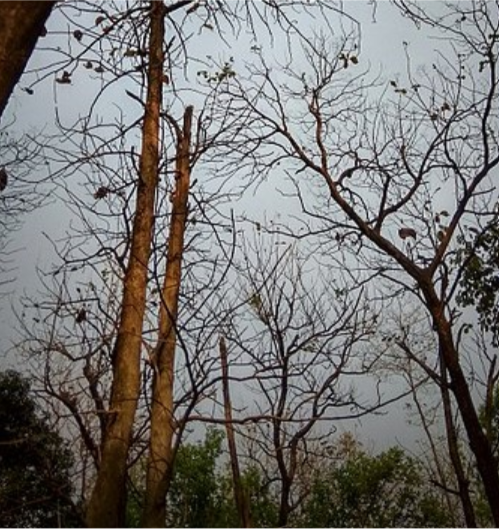
My life feels like this tree — tired and worn from the daily struggles of work and home. But I still have hope. Just like the tree grows new leaves after a tough season, I believe better days will come for me too. – Farida, Female, Barisal
This participatory approach strengthens advocacy efforts by ensuring CHWs’ voices are heard in discussions with policymakers and health system stakeholders. The images they produce serve as evidence, making the case for more supportive policies, better working conditions, and mental health resources within the healthcare system.
However, it’s important to remember that every step of the photovoice process—from building rapport to sharing the findings—shapes the quality and impact of the outcome. Photovoice is not simply about taking random pictures; —it’s about seeing the world through the eyes of those who live in it. Imagine a group of participants gathering in a small room, some hesitant, others excited, holding cameras or smartphones in their hands. Their mission? To tell their own stories, in their way. Here’s a glimpse into how it was done:
Implementing photovoice in SHINE: a step-by-step process on how to implement photovoice in mental health research
1. Setting the stage: Start with a purpose
The orientation begins with a conversation. Not a lecture, but a dialogue—where laughter, concerns, and curiosity mix. In this stage, researchers inform the participants- co-researchers- about the project goal, and CHWs discuss their role in shaping its outcomes. Participants express their hopes, concerns, and the hidden realities they want to bring to light. Trust-building is crucial—Photovoice is not about perfect images but meaningful storytelling
2. Finding the storytellers
Participants are chosen based on their lived experiences within the healthcare system. A diverse group, considering factors such as age, gender, and geographical location, enriches the collective narrative.
3. Learning the art of seeing
Before stepping into the field, participants engage in hands-on practice. This is a good time to inform them about the ethical considerations of taking pictures. Some are familiar with photography; others hold a camera for the first time. They discuss angles, lighting, and framing, but most importantly, they explore what makes an image speak. Every shot has a purpose. A discarded prescription slip, a quiet street at dusk, a waiting room filled with anxious faces—each image carries a message.
4. Capturing everyday realities
CHWs document their daily experiences over a set period, capturing the struggles, triumphs, and nuances of their work. These images provide raw, unfiltered insights into their mental well-being and professional challenges.
5. Analyse together- bringing stories to life
When the CHWs reconvene, they sit in a circle, sharing their photos one by one. Participants explain the significance of their photos, providing context and depth. Themes and patterns emerge as participants and researchers collaboratively interpret the photographs. This shared process ensures the findings remain authentic and representative of diverse community voices.
6. Turning images into action
The final phase involves using these visual narratives for advocacy. CHWs decide how their stories will be shared— whether through community exhibitions, policy forums, or digital campaigns. The images become powerful tools for influencing decision-makers and advocating for systemic improvements in mental health support for CHWs.
Photovoice is more than just a research method – it is a tool for empowerment, advocacy, and change. By integrating Photovoice into the SHINE Project, CHWs are given a platform to voice their realities in ways that demand attention and action. Their stories, captured in powerful images, illuminate the urgent need for mental health support and systemic reform within community health systems. Through this approach, the SHINE Project not only amplifies CHWs’ voices but also paves the way for a more responsive and supportive healthcare environment.
Written by Obaida Karim and Semonty Jahan
References:
● Hanna, L., & Hanna, L. (2023, November 16). Photovoice as a research method for community development. Applied Worldwide | Making Sociology Count. https://appliedworldwide.com/photovoice-as-a-research-method/
● Strack, R. W. (n.d.). What is Photovoice: a brief summary. In University of North Carolina Greensboro. Retrieved December 19, 2024, from https://communityengagement.uncg.edu/wp-content/uploads/2019/11/What-is-Photovoice-A-Breif-Summary_Strack-Dec-2017.pdf
● Skovdal, M., & Rumi, Sk. R. Ullah. (n.d.). Photovoice guidance: 10 simple steps to involve children inneeds assessments. Save the Children. https://bangladesh.savethechildren.net/sites/bangladesh.savethechildren.net/files/library/Photovoice_needs_assessment_guidelines_full_report_0.pdf
● Han, C. S., & Oliffe, J. L. (2016). Photovoice in mental illness research: A review and recommendations. Health:, 20(2), 110-126. https://www.jstor.org/stable/26652338