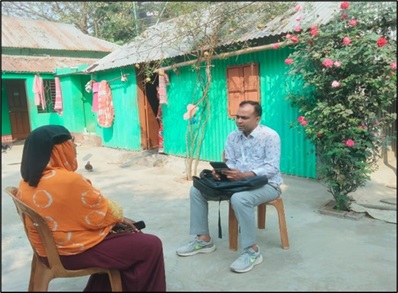
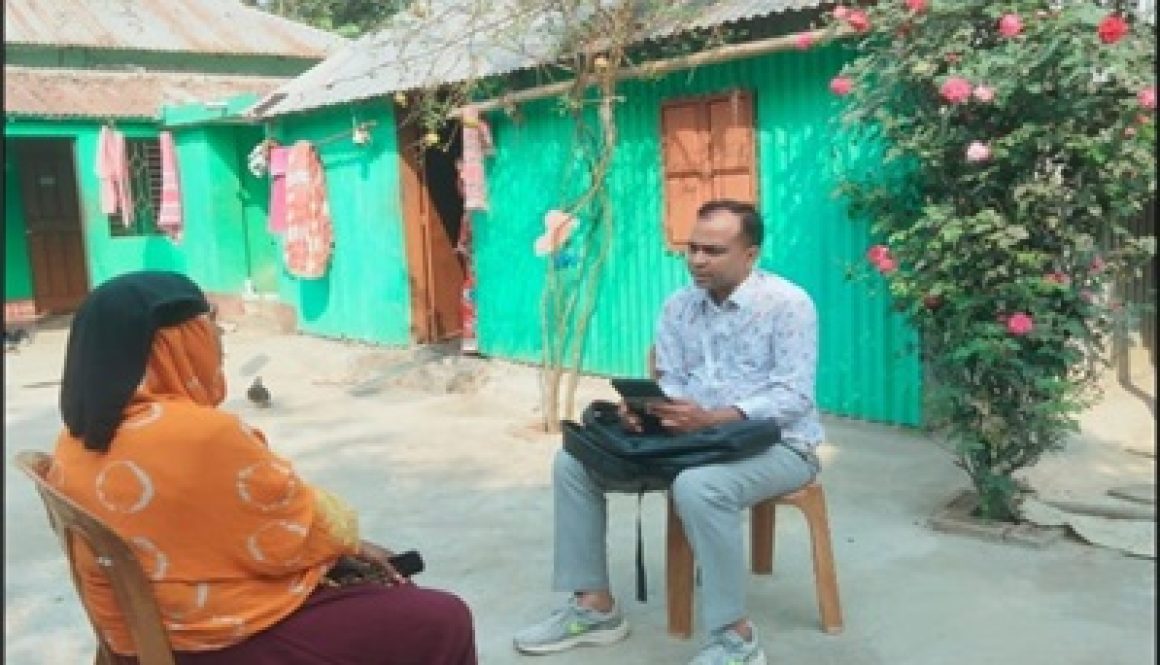
We often walked for hours through fields, woods, and along riverbanks just to find one household. And sometimes, by the time we arrived, the man we were supposed to interview had already left the house for work.
Between February and March 2025, the SHINE Bangladesh team travelled to Mymensingh and Barishal to conduct a baseline survey for the SHINE project. Our plan was to cover five subdistricts each in the Barishal and Mymensingh districts. The subdistricts in Barishal are mostly river-oriented and remote, where commuting often requires crossing waterways. In contrast, the subdistricts in Mymensingh are largely industrial and host internally migrated communities. There are areas located near the international border where movement by outsiders is often restricted due to political tensions and limited transportation options. It was fulfilling work but also full of twists, turns, and lessons we didn’t expect.
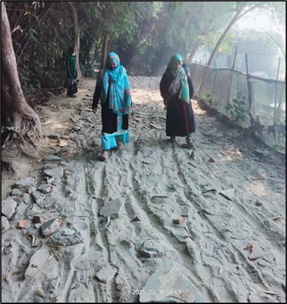
According to the sampling design, we had to move every 10 households to collect data. The distance between two homes wasn’t just a number. The maps don’t tell you how rough the roads are—or how much your legs will feel it later. Especially in Barishal’s char areas (river islands), reaching homes was a journey in itself. We walked through muddy paths and broken roads and even crossed small rivers. Sometimes, a boat was the only way forward, and we had to wait for hours to get a boat to cross the river. Other times, it was a hired motorbike ride followed by a 30- to 40-minute walk on the edge of a paddy field. Some clusters were so scattered that reaching the next household felt like trekking to a new village altogether.
Even after walking for miles to reach the households with the formed clusters at villages, one thing quickly became clear that in both districts, catching the male household head at home was not an easy task. In most cases, they would be out of their houses for work; some were nearby, others far away. It got even tougher during the harvesting season. We found ourselves going back to those homes more than once, adjusting our timing or rescheduling the interview.
Almost half of the data collection happened during the holy month of Ramadan, and that changed a lot of our daily work patterns. Many women were busy with prayers, preparing iftar, or simply didn’t feel up to talking during the day while fasting. On the other hand, in more conservative char regions, sometimes religious norms made it difficult for male data collectors to speak directly to women, which meant in those cases we had to rely more on female team members or reschedule visits, or sometimes both.
The sampling plan looks good in the office, but in real life, villages don’t always follow our spreadsheets. In some places, there just weren’t enough eligible households, so we had to move beyond the original boundary. That meant more walking, more coordination, and fewer interviews per day. And the “every 10th household” rule? In areas where homes are far apart or irregularly spaced, sticking to that “every 10th household” rule became a logistical puzzle. We had to have an instant short team meeting at field sites with the team lead and field team to make adjustments while keeping the integrity of our data quality.
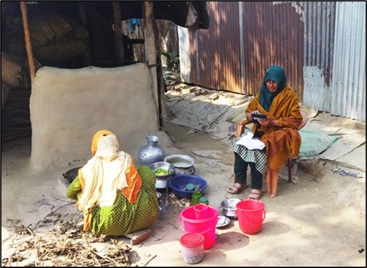
In the Dhobaura subdistrict, Mymensingh, we hit a difficult situation. A recent incident of sexual violence had shaken the community where we were supposed to collect data, and the atmosphere was tense. Police patrols and local gatherings made it nearly impossible to continue fieldwork for a while. We had to be very strategic and careful during that tense time. And in border-side unions like Dokkhin Maijpara, in Dhobaura subdistrict, where cross-border unrest is common, outsiders (like us) weren’t always welcomed with open arms. Some community members were wary or suspicious, and earning trust became part of the job. Inspection by border guards was common while commuting to the targeted households.
If this fieldwork taught us anything, it is that maintaining methodological rigor while remaining flexible, both in scheduling and in mindset, is essential. In future field plans, we need to consider wider data collection windows, aligned with local routines (i.e., harvesting time, Ramadan, etc.). We should consider gender-matched field teams, especially in culturally sensitive areas like ours. Field plans should have time for community outreach ahead of data collection, to ease suspicion and build rapport, and account for terrain and travel time, not just sample size.
SHINE isn’t just about surveys. It’s about connecting with communities, listening closely, and making sure those often left out are finally counted—and heard.
Written by: . Ranjan Koiri (Senior Research Associate, BRAC JPGSPH, BRAC University),
Sukamal Chakma (Sr. Officer, Data Management, BRAC JPGSPH, BRAC University),
Community Health Workers (CHWs) are essential to the success of healthcare systems, particularly in low- and middle-income countries (LMICs) like Kenya and Bangladesh. CHWs bridge the gap between formal healthcare facilities and underserved populations, ensuring that even the most marginalised communities receive basic health services. However, their role comes with immense challenges, from overwhelming workloads to a lack of resources, training, and psychological support. These stressors often take a toll on their mental well-being and can hinder their ability to deliver quality care.
Recognising this, the Strengthening health systems by addressing community health workers’ mental well-being and agency (SHINE) project has embarked on an innovative approach to strengthen health systems by addressing the mental health and agency of CHWs in both urban slums and remote rural areas in Kenya and Bangladesh. In Kenya, the urban informal study sites are; Viwandani and Korogocho, both in Nairobi City County. The rural setting study sites on the other hand are Lari and Gatundu North which are both in Kiambu County. The project, which runs from 2023 to 2026, aims to ensure that CHWs are resilient, well-supported, and equipped to thrive in their roles. The interdisciplinary team comprises researchers, implementers, policymakers, CHWs, government (National and County) and, non-governmental organisations.
Understanding the Challenges Faced by CHWs
CHWs often find themselves working in some of the most challenging environments, dealing with heavy caseloads, limited training, and poor working conditions. These issues are amplified in LMIC contexts, where health systems are already strained. In Kenya’s urban slums and Bangladesh’s rural regions, CHWs are critical in providing preventive care services at household level s ranging from infectious diseases, water and sanitation, maternal and child health. However, the personal and professional stressors they face—be it societal expectations, financial constraints, or limited access to mental health services—can diminish their productivity and emotional resilience.
Without appropriate support structures, these health workers are at risk of poor mental health outcomes, which could ultimately affect the communities they serve.
SHINE is designed to tackle these complex challenges by focusing on four main objectives:
1. Identifying strategies for well-being
The project aims to develop strategies and programs that promote CHW mental health in a way that is equitable, sustainable, and contextually appropriate. By examining the diverse experiences of CHWs in Kenya and Bangladesh, SHINE will gather insights into the most effective ways to address mental well-being within these settings.
2. Co-designing innovative interventions
At the heart of the project is co-design. CHWs, along with healthcare system leaders, are involved in shaping innovative interventions tailored to their unique challenges. These interventions will address not only the mental health aspects but also social, material, and human stressors that affect CHWs on a daily basis.
3. Enhancing existing support approaches
SHINE seeks to enhance the quality and equity of existing support structures within the health systems of both countries. By doing so, the project will ensure that CHWs receive adequate mental health support, with a focus on addressing their diverse needs, whether they arise from personal stress or job-related demands.
4. Advocating for CHW mental well-being
Beyond direct intervention, SHINE also aims to contribute to the growing body of evidence on CHW mental health. The project’s findings will provide critical insights for future program design and research, influencing policy-makers and health system stakeholders to prioritize mental health support for CHWs across other LMICs.
The lessons learned from the SHINE project are not limited to Kenya and Bangladesh. By conducting cross-contextual and cross-country comparisons, SHINE will develop a scalable framework that can be adapted and implemented in other LMICs. The goal is to create a global movement that recognizes the mental well-being of CHWs as central to the functioning of robust health systems.
As the project progresses, SHINE will engage with various stakeholders, including local communities, health system leaders, and international organizations, to ensure that the support structures developed are inclusive, sustainable, and adaptable.
Written by Freshiah Njoroge, a communication expert supporting the SHINE project, at LVCT Health
Community Health Officers (CHOs) supervise the CHAs inorder to ensure they fulfil their performance goals and provide high-quality healthcare services. It was clear from a recent meeting in Korogocho (which is an urban informal settlement) with both CHOs and CHPs that CHOs frequently endure higher stress levels than CHPs.
The CHOs expressed that their stress stems from the fact that their performance is directly tied to the success or failure of the CHPs. If CHPs do not meet their targets or fail to deliver as expected, it negatively impacts the CHOs’ evaluations. Additionally, CHOs are often caught between the demands of their supervisors and the challenges in the community that are managed by the CHPs, creating a high-pressure environment.
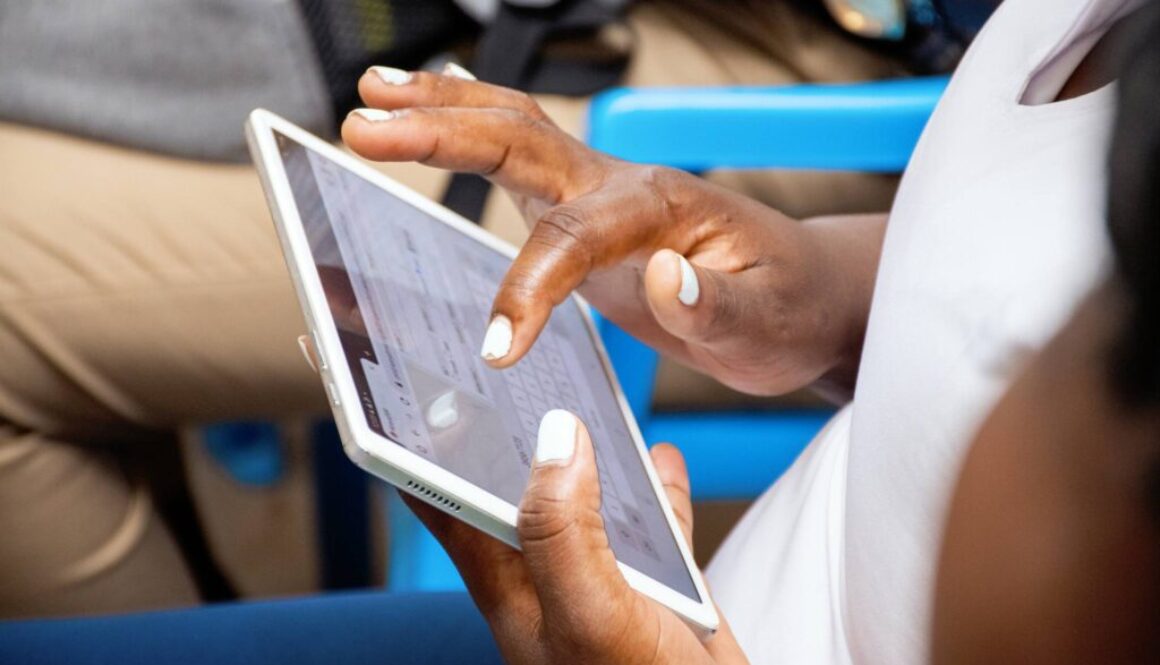
One major source of stress for CHOs is the performance-based system implemented through the electronic Community Health Information System (eCHIS). Under this system, in order for the CHPs to get their stipend they must achieve an 80% target by visiting at least 33 households and making referrals, unlike when the process was manually because the CHOs now have no control over the system-generated results. Previously, CHOs could intervene to adjust scores to ensure CHPs received their stipends, but this is no longer possible.
Sometimes CHPs achieve the required 80% but still do not receive their stipends. When this happens, CHAs must handle complaints and provide explanations, despite having no control over the system. When the stipends delay, the CHOs are usually called late at night or early morning by the CHPs seeking answers, further adding to the CHO’s stress. In many cases, CHOs are forced to give CHPs false reassurances just to prevent excessive follow-up calls, all while dealing with the uncertainty themselves.
CHPs receive a total stipend of Ksh6,000, comprising Ksh3,500 from the performance-based and Ksh2,500 from the national government. However, these payments are not made simultaneously, and the national government often delays disbursements for months. This financial uncertainty contributes to frustration among CHPs, which in turn increases the stress on CHOs who must handle their grievances.
Both CHOs and CHPs acknowledged that the pressures of their roles contribute to burnout, disagreements, and workplace tension though afterwards they laugh about them. There was a request for a structured mental well-being interventions and debriefing sessions for both CHOs and CHPs to help them cope with the demands of their work.
The role of CHOs extends beyond supervision for they are the bridge between CHPs and the healthcare system, often bearing the brunt of systemic failures. It is important to address their mental well-being for it will be impactful to effectively fulfill their critical roles in community health services.
Mercy* is a Community Health Promoter (CHP) in Viwandani, an informal settlement in Nairobi, Kenya. The name Viwandani, which means “Industries” in Kiswahili, reflects the settlement’s proximity to numerous factories. It is a place known for its bustling workforce, narrow pathways, and a maze of loosely hanging electrical wires—some dangerously exposed. Navigating these precarious conditions is a skill on its own, and for CHPs like Mercy, it’s just one of the many daily challenges they face.
The Backbone of Primary Healthcare
Globally, Community Health Workers (CHWs)—now referred to as CHPs in Kenya—are the lifeline between informal communities and formal healthcare systems. In low-resource settings, they are often the only accessible health providers for many urban and rural poor. In September 2023, the Kenyan government rebranded CHWs as CHPs, making them the key drivers of Universal Health Coverage. Each CHP is responsible for at least 100 households, visiting them to promote health awareness and prevent diseases. However, for Mercy, this number has increased to 117 households following the devastating floods of August 2024, which left many CHPs displaced and communities in turmoil.
Despite their critical role, CHPs remain overworked, underpaid, and largely unrecognized, facing immense emotional and financial strain. The mental toll of their work is often overlooked, yet emerging evidence from Africa and Asia highlights the severe stress they endure due to excessive workloads, inadequate training, and insufficient compensation.
The NHIR-SHINE Study: A Glimpse into the Lives of CHPs
Mercy is among the 14 co-researchers participating in the NHIR-SHINE study, a collaborative initiative led by LVCT Health in Kenya, APHRC, BRAC in Bangladesh, and LSTM in the UK. This study seeks to explore the strengths, challenges, and opportunities for enhancing CHPs’ mental well-being in low- and middle-income countries.
Utilizing mixed methods, including surveys and Community-Based Participatory Research (CBPR) approaches such as Photovoice, Narrative Timeline Interviews, and Body Mapping workshops, the study captures the realities of CHPs’ lived experiences. Through Photovoice, Mercy has visually documented the challenges and motivations that shape her daily work. Her images tell a story of resilience, hardship, and hope.
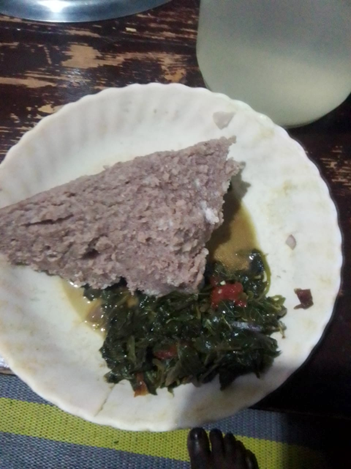
“What motivated me to take this picture was the realization that, as a volunteer caregiver, I couldn’t provide a balanced diet for my own family. It hurt me a lot because I am the one who goes out to teach others about healthy eating, yet I can’t afford it for my own children. It causes me so much stress.”
Mercy’s struggle is not unique. A report by the African Cities Research Consortium (ACRC) highlights that residents of informal settlements suffer from malnutrition, stunted growth, and micronutrient deficiencies due to food insecurity. The paradox is painful—those tasked with promoting nutrition are often the ones struggling to afford it.
With meagre earnings, CHPs like Mercy are forced to take up side jobs, hoping to supplement their income. Some days they find work; other days, they don’t. The stipend they receive is barely enough to survive, yet they continue serving their communities with unwavering dedication.
In Mercy’s case, the preacher who preaches wine ends up drinking water! This causes significant stress to Mercy as she helplessly watches her young family feed an unbalanced diet due to her financial limitations. “This condition exists because, as a CHP, the income I receive is very little, so I have to push myself to find other side jobs to supplement the stipend I get. Sometimes I manage to find extra work, and sometimes I don’t, and whatever I earn from that is what I use to provide for my children at home. So, the little we earn as CHPs also contributes to this situation.” She speaks.
Living in Constant Fear: The Burden of Uncertainty Anxiety has become a constant companion for many CHPs, exacerbated by unsafe living conditions. Studies show that chronic anxiety not only affects mental health but also has severe physical consequences. The fear of losing everything at any moment adds an emotional burden to an already overwhelming job.
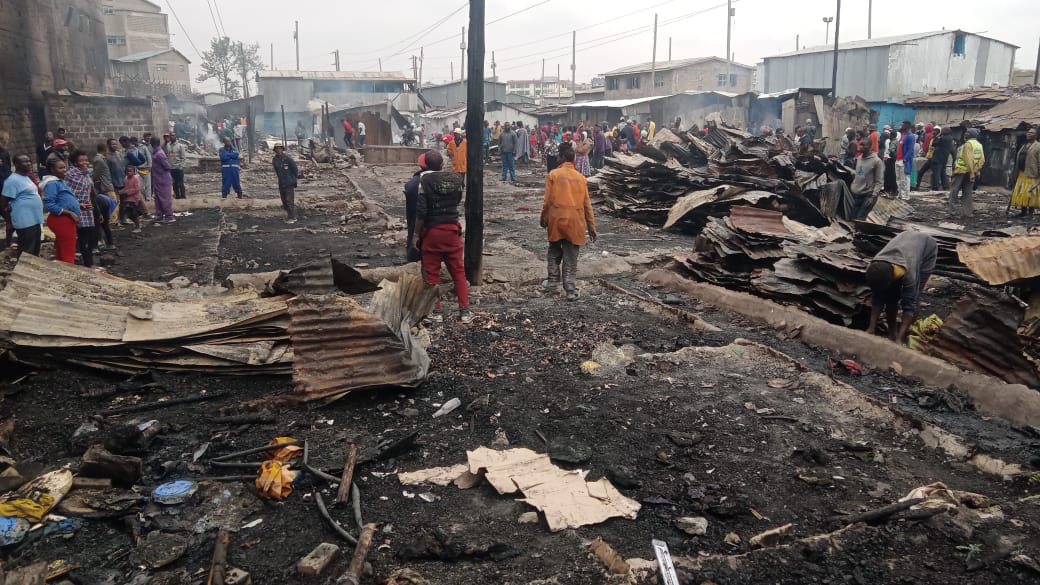
“…the houses got burned. [Pauses] What this represents to me is the fear that I can leave home to work, only to return and find everything I own is gone. Every time I leave, even now as I’m here, I worry if I will find my things intact when I return.”
In Mercy’s community, fires frequently break out due to poor infrastructure, illegal electrical connections, and unsafe cooking practices. The lack of proper roads makes it nearly impossible for emergency services to respond in time. “The biggest challenge is our infrastructure. Fire engines can’t access our homes when there’s an emergency. Most power connections are illegal, done by people without proper training, making it even more dangerous.”
An Overwhelming Workload: A System Pushed to the Brink A 2024 systematic review on CHW workload and supervision in Indonesia revealed that many felt burdened by unrealistic workloads, disproportionate responsibilities, and inadequate incentives. The situation is no different in Kenya. Although the Primary Health Care Act (2023) outlines CHPs’ roles, many find themselves drowning in additional, unofficial tasks. Mercy’s experience is a testament to this: “As CHPs, we’ve been given so much work, yet our pay is so little. We are told to volunteer for two hours, but that’s impossible. We have to visit 33 households per month, collecting data on everything from child nutrition to maternal health. If one household has five people, we attend to all of them. By the end of the month, we’re exhausted, unable to look for other jobs, and surviving on a stipend that barely covers a meal for our children.” The excessive workload, coupled with financial strain, takes a heavy toll on CHPs’ mental well-being. They find themselves stretched thin, juggling between serving their communities and meeting their own basic needs.
The Way Forward: A Call for Action Mercy’s story is not an isolated case—it is the reality for thousands of CHPs across Kenya and beyond. To safeguard their mental well-being and improve healthcare outcomes, urgent interventions are needed:
Realistic Workload Planning: Policymakers must ensure CHPs’ responsibilities are manageable, allowing for a proper work- life balance.
Fair Compensation: Adequate stipends and financial incentives should be provided to sustain CHPs and their families.
Supervisory Support & Mental Health Services: Structured debriefing sessions and one-on-one counselling should be integrated into CHPs’ schedules.
Infrastructure Improvement: Informal settlements need better roads, safer electrical connections, and accessible emergency services.
“I love going to watch the sunset because it makes you reflect on how life and nature are beautiful. Yeah, despite all the challenges you may be going through in life, the sunset reminds you that even though today is ending, tomorrow will bring a new day, new opportunities.””
CHPs are the backbone of Kenya’s primary healthcare system. Investing in their well-being is not just a moral obligation but a strategic move towards strengthening healthcare for all.
*Mercy’s name has been changed to protect her identity.
Join Cuckold Telegram Channels to Connect and Share Experiences
Joining cuckold telegram channels is a popular way for people interested in this lifestyle to connect and share experiences. These channels offer a safe space where members can discuss their thoughts, feelings, and stories openly. By participating in cuckold telegram groups, individuals find support and understanding from others who share similar interests. The platform allows for easy communication and the exchange of advice, making it a valuable resource for those exploring or living the cuckold lifestyle. Whether you are new or experienced, cuckold telegram channels provide a welcoming community to learn and grow together.
Understanding Cuckold Telegram Groups and Their Purpose
Cuckold telegram groups serve as special places where people interested in cuckoldry can come together. These groups are designed to encourage open cuckold communication and foster a sense of belonging. Members use these spaces to share stories, ask questions, and take part in cuckold discussions that help them understand the lifestyle better.
These groups also promote cuckold engagement by allowing users to interact through messages, voice chats, and shared media. This kind of cuckold socializing helps build trust and friendships among members. The purpose of cuckold telegram groups is to create a supportive environment where everyone feels comfortable expressing themselves.
What Is a Cuckold Telegram Channel?
A cuckold telegram channel is a type of online community on the Telegram app focused on cuckold topics. It acts like a bulletin board where members can post updates, share content, and start conversations. Unlike private chats, channels often have many subscribers who receive messages from the channel admins.
These channels encourage cuckold communication by providing a steady flow of information and discussion prompts. They help members stay connected and informed about the latest trends and ideas in the cuckold community. Channels often complement cuckold groups by offering a more organized way to share content and announcements.
How Cuckold Telegram Facilitates Cuckoldry Discussions
Telegram makes cuckold discussions easy and private. The app supports group chats where members can talk in real time, share photos, and send voice messages. This flexibility enhances cuckold engagement by allowing people to communicate in ways that suit them best.
Cuckold telegram groups also use features like polls and pinned messages to keep conversations focused and interactive. These tools help guide cuckold communication and encourage members to participate actively. The platform’s privacy settings ensure that discussions remain confidential, which is important for many in the cuckold community chat.
Benefits of Joining a Cuckold Community Chat on Telegram
Joining a cuckold community chat on Telegram offers many advantages:
Safe Space: Members can express themselves freely without fear of judgment.
Support Network: People find advice and emotional support from others who understand their experiences.
Easy Access: Telegram is available on many devices, making cuckold socializing convenient.
Active Engagement: Real-time chats keep members involved and connected.
Diverse Content: Members share a variety of media, from text to videos, enriching cuckold discussions.
“Being part of a cuckold telegram group means joining a community that values respect, openness, and shared learning.”
These benefits make cuckold telegram groups a popular choice for those seeking connection and understanding within the cuckold lifestyle.
Types of Content and Interaction in Cuckold Telegram Channels
Cuckold Telegram channels offer many ways for members to connect and share. These channels include different types of content and activities that help people learn, talk, and support each other. Members can find stories, advice, and discussions that fit their interests and needs. The channels also encourage networking and building friendships within the cuckold community.
Sharing Cuckold Stories and Experiences
One popular type of content in these channels is sharing personal cuckold stories and cuckold experiences. Members tell their own tales or read about others’ journeys. This sharing helps people feel less alone and more understood.
Stories can be about first times, challenges, or happy moments.
Experiences often include lessons learned and feelings involved.
Sharing helps build trust and openness among members.
“Reading real cuckold experiences gives me hope and new ideas,” says one member.
Engaging in Cuckold Lifestyle Discussions and Fantasies
Cuckold lifestyle discussions are a big part of the channels. Members talk about what the lifestyle means to them and explore cuckold fantasies in a respectful way.
Discussions cover topics like boundaries, emotions, and relationship dynamics.
Fantasies are shared to inspire and understand different desires.
These talks help members grow and feel accepted.
Participating in Cuckold Forums and Networking Opportunities
Many channels act like cuckold forums where people can ask questions and join group chats. These forums are great for cuckold networking and meeting others with similar interests.
Activity
Purpose
Benefit
Group chats
Real-time conversation
Builds friendships
Q&A sessions
Get answers from experienced members
Learn new tips and advice
Event announcements
Meetups or online gatherings
Expand social circle
Networking helps members find support and make connections that last beyond the Telegram channel.
Accessing Cuckold Support and Advice from Community Members
Support and advice are key parts of these channels. Members often share cuckold support and cuckold advice to help others through tough times or questions.
Support includes emotional encouragement and understanding.
Advice covers practical tips for communication and relationship health.
This creates a caring environment where everyone can grow.
“The advice I got here helped me talk openly with my partner,” shares a member gratefully.
Joining cuckold groups on Telegram is a great way to connect with others who share similar interests. These groups offer a space for cuckold networking, where members can engage in meaningful cuckold communication. Understanding how to navigate these groups helps you enjoy positive cuckold interaction and learn about cuckold dynamics within the community.
When you join, it’s important to respect the rules and be open to conversations. This makes the experience enjoyable for everyone and helps build trust among members. By participating actively, you can benefit from the support and knowledge shared in these groups.
Steps to Find and Join Cuckold Telegram Channels
Finding the right cuckold telegram groups involves a few simple steps:
Search Keywords: Use terms related to cuckold networking to find channels that match your interests.
Check Group Size: Larger groups may offer more activity, but smaller groups can provide closer interaction.
Read Descriptions: Look for groups that explain their focus and rules clearly.
Request to Join: Some groups require approval, so send a polite request.
Introduce Yourself: Once accepted, start with a friendly introduction to begin cuckold communication.
Step Number
Action
Purpose
1
Search keywords
Find relevant groups
2
Review group size
Choose active or intimate groups
3
Read descriptions
Understand group focus
4
Request membership
Gain access to private groups
5
Introduce yourself
Start positive interaction
Following these steps helps you join groups where cuckold interaction is respectful and welcoming.
Understanding Cuckold Dynamics and Communication Rules
Cuckold dynamics in Telegram groups often involve clear communication and respect for boundaries. Each group may have its own set of rules to guide cuckold communication and maintain a positive environment.
Respect Privacy: Members share personal stories, so confidentiality is key.
Be Polite: Use kind language and avoid arguments.
Follow Group Rules: These may include no spamming, no offensive content, and staying on topic.
Engage Thoughtfully: Participate in discussions with care and understanding.
“Good cuckold communication means listening as much as sharing,” says a group member.
Understanding these dynamics helps create a safe space where everyone feels comfortable to express themselves and enjoy cuckold networking.
Categories and Topics Commonly Found in Cuckold Telegram Communities
Cuckold telegram groups cover a variety of topics to support different interests and experiences. Common categories include:
Personal Stories: Sharing real-life cuckold experiences.
Advice and Support: Tips for healthy relationships and emotional support.
Lifestyle Discussions: Exploring cuckold dynamics and fantasies.
Networking Events: Announcements for meetups or online gatherings.
Q&A Sessions: Opportunities to ask questions and learn from others.
Category
Description
Example Topics
Personal Stories
Members share their own experiences
First times, challenges, successes
Advice and Support
Guidance on relationships and feelings
Communication tips, emotional care
Lifestyle Talks
Discussions about cuckold dynamics
Boundaries, fantasies, roles
Networking Events
Social opportunities
Meetups, virtual hangouts
Q&A Sessions
Interactive learning
Relationship questions, advice
These topics encourage active cuckold interaction and help members grow within the community.
FAQ: Cuckold Telegram Channels
Cuckold Telegram channels are popular places where people interested in this lifestyle can ask cuckold questions and get helpful cuckold advice. These channels offer cuckold support by connecting members who want to share their experiences and learn from each other. Many channels also have a cuckold community chat where people can talk openly and feel part of a group.
People often wonder about safety, privacy, and how to find the right group. Below are some common questions and answers to help you understand more about these channels.
How Safe Is It to Join a Cuckold Telegram Group?
Joining a cuckold Telegram group can be safe if you follow some simple rules. Most groups have moderators who watch over the chats to keep things respectful and friendly. They help prevent spam and block anyone who breaks the rules.
Safety Tips
Why It Matters
Use a nickname or username
Protects your real identity
Avoid sharing personal info
Keeps your privacy secure
Follow group rules
Helps maintain a positive space
Report bad behavior
Keeps the community safe for all
By being careful and respectful, you can enjoy the cuckold community chat without worries.
Can I Remain Anonymous in Cuckold Telegram Communities?
Yes, you can stay anonymous in most cuckold Telegram groups. Many members use fake names or nicknames instead of their real names. This helps protect their privacy while still allowing them to join in cuckold discussions.
You don’t have to share your phone number with other members.
You can control what information you share in the chat.
Some groups allow you to join without showing your profile picture.
Staying anonymous helps people feel more comfortable asking cuckold questions and seeking cuckold advice.
What Types of Cuckold Interests Are Discussed?
Cuckold Telegram channels cover many different topics related to the lifestyle. Members talk about their personal stories, fantasies, and relationship experiences. Here are some common interests discussed:
Exploring cuckold fantasies and desires
Sharing relationship tips and advice
Discussing emotional support and challenges
Talking about boundaries and communication
“It’s great to find a place where I can talk about my interests without feeling judged,” says a community member.
How Can I Connect with Like-Minded Cuckold Partners?
Connecting with others who share your interests is easy in cuckold Telegram channels. You can join group chats, participate in discussions, and even find people for private conversations.
Here are ways to connect:
Join active cuckold community chat groups
Participate in Q&A sessions to learn and share
Attend virtual meetups or events announced in channels
Reach out to members who share similar interests
Building friendships and support networks is one of the best parts of these channels.
Are There Moderators in Cuckold Telegram Channels?
Yes, most cuckold Telegram channels have moderators. These moderators help keep the group safe and welcoming by:
Enforcing rules and guidelines
Removing spam or inappropriate content
Helping members with questions or issues
Encouraging respectful cuckold communication
Moderators play an important role in providing cuckold support and making sure the community chat stays positive and helpful.